I am so fortunate.
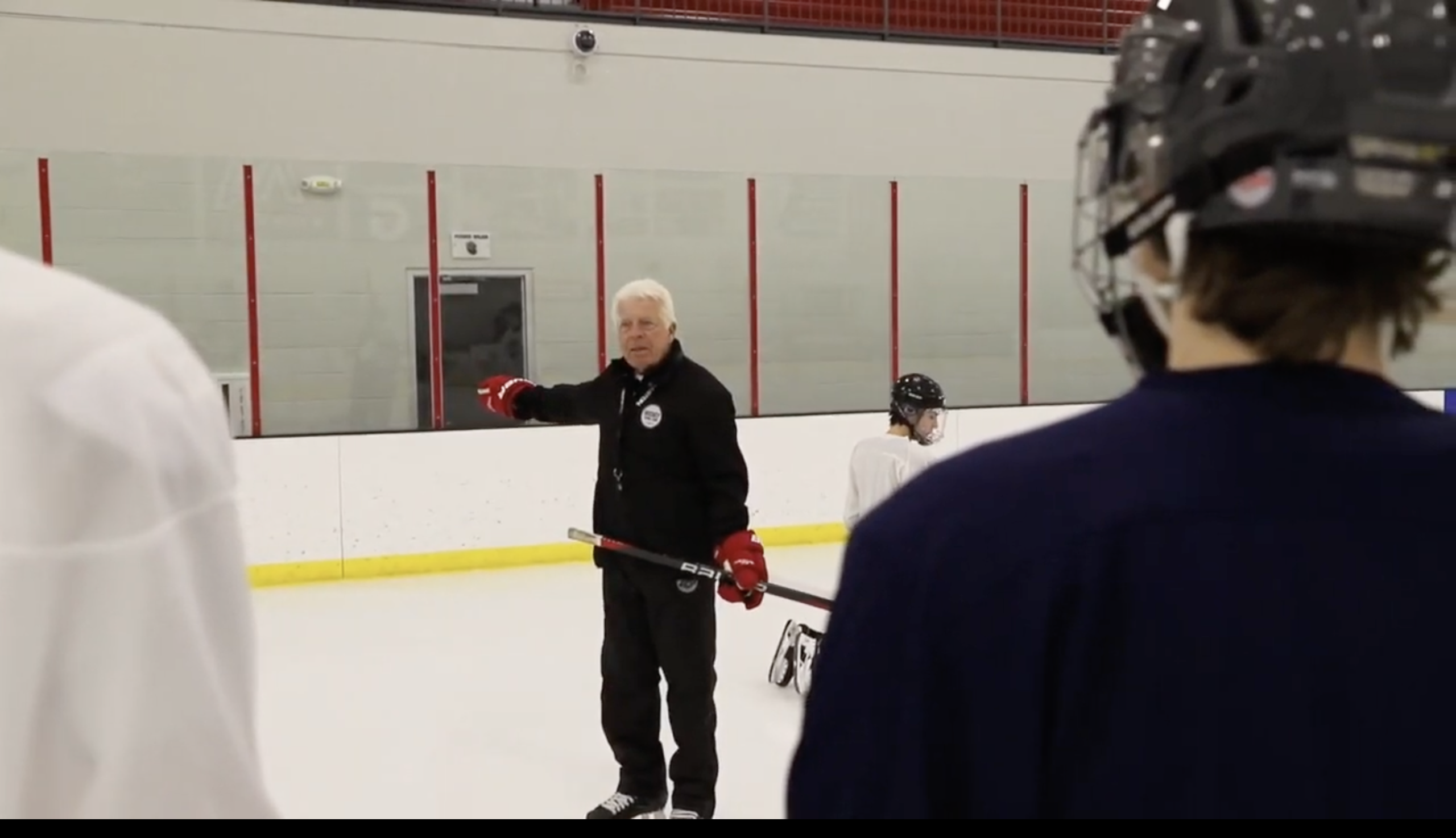
Over the past few years, I’ve traveled to different areas around the country with Barry Smith working with youth players and coaches on player development. Barry won 7 Stanley Cups as a coach and in player development with the Penguins, Red Wings, and Blackhawks, has worked and coached all over the world, and is now giving back to the game working with coaches and players at all levels.
It’s been so cool to see his passion for player development and the education I’ve gotten from watching him work has been immeasurable. It’s made me so much better and challenged the way I think about the game in many ways on how to help make players and coaches better.
Today, I get to share much of that with you. Here are the 3 biggest things I’ve learned from Barry:
1. The game is all about transition – and that should be a big part of player development
When you look at the game today at the highest levels, there is a stat that is really eye opening:
-On average, 25% of the game your team will have possession of the puck – 25% of the game your opponent will have possession of the puck – and 50% of the game there is contested possession of the puck where neither team has full possession. If 50% of the game there’s contested possession with a race or a battle, that’s something we should really focus on in the development of our players.
The best part about teaching through transition is it’s a great way to teach hockey sense. Here’s how:
So often with races and battles, we focus on the one-on-one aspect of winning the battle for the puck. As we should. We should teach kids how to win the race to space in front of their opponent, taking their hands away so they get a better angle to the puck. We should teach them proper technique of staying low so we have a more powerful center of gravity.
But even more important than that – what’s next?
It’s one thing to win a battle for a puck, it’s another to be able to make a play with it once you have possession. What good is getting the puck if you don’t do anything with it after getting it? We should focus more on the ‘what’s next’ aspect of making that next play in transition – encouraging players to make a fast play once they win the puck.
And even more important than that – where are their teammates going to get to spots of support once that puck is won? So much of developing hockey sense is understanding how to read and more importantly anticipate transition opportunities faster than your opponent and getting to areas of the ice of support to get the puck from a teammate.
Did my teammate win the race to the puck? YES – OK boom there I go to get to a spot to support.
Teaching in transition is not just on the offensive side of the puck, but on the defensive side as well.
Did my teammate lose the race to the puck? YES – OK boom there I go to outnumber in the battle or get above one of the support players depending on what I read.
So much of what we hear about developing hockey sense is when a player has the puck. I’ll argue it’s way more important what we teach away from the puck. And reading and anticipating transition is a great way to do it.
If you really want to break down the best players in the game, especially McDavid, it’s that thinking fast in transition that elevates them to the top.
2. Hockey is a TEAM game
The focus of hockey development has shifted where it’s so much more tailored to individual development of skill rather than creating players that understand the game. Unstructured play has been replaced by one-on-one skill sessions. And that’s not to say you can’t get better during those sessions with the right coach. But if a player can stickhandle, skate, and shoot – but they don’t understand how to play the game of hockey – their shelf-life in the game is going to be pretty short.
Unstructured hockey needs to make a comeback. The type of training where kids feel free to make mistakes, try things out, fail, learn from them, play with multiple age groups – it’s how so many players learn the in’s and out’s of the little nuances of playing the game.
But even in team practices, it’s so important to put kids in situations that will replicate the game through read and react situations. The game is not played with one player – it’s played with multiple players that need to read off each other and their opponents. It’s why adding transition aspects to drills are so great for development – they force players to make reads and think in pace.
Kucherov’s clip where he talked about the game being lower IQ today is largely, in my opinion, due to what we’re talking about right now. The overemphasis on individual skill and the lack of emphasis on play (structured and unstructured) has led to many people at the highest level of the game talking about the game having an abundance of skill, but a scarcity of hockey sense and compete.
Focusing on competition and team play also develops little habits so important to having success in the game like scanning, communication, timing, spacing, and positioning. Developing these micro habits will lead to better macro habits like hockey sense and compete which are the foundation of many of the elite players at the highest levels of our game.
3. Championships are won by TEAMS – a lesson for youth hockey development
Barry has coached some of the best players to ever play the game:
Lemieux, Jagr, Francis, Coffey, Yzerman, Lidstrom, Fedorov, Kane, Keith, Toews…and many, many more.
But the coolest part of hearing him talk about those years is his emphasis that their cups weren’t won by stars, they were won by TEAM and depth. He speaks glowingly of how their fourth line was better than the other team’s fourth line and their role players were better than the other team’s role players.
I think of Draper, Maltby, and McCarty in Detroit or Hjalmarsson, Bickell, and Shaw in Chicago. Everyone had a role. Every player was important. And every coach and player respected everyone on the team – no matter how talented or what role they played.
It’s something we’ve lost a little bit in youth hockey today – the fact that every player is important on a team and should be developed in that respect. I get so many messages where youth teams shorten the bench and only play their top two lines. Or only cater to the angry top player’s parents.
We as a hockey community have also narrowed the talent pyramid way too early and lose out on developing kids that could turn into elite players but are just physically behind in their development.
I’ve done so much research on this topic, and having these “elite” teams at these really young ages is SO COUNTERPRODUCTIVE to player development – both for the kids that get left off those teams AND the kids that make those teams.
The kids that get left off don’t get the quality coaching that the top players get, widening the talent gap that really isn’t a talent gap. It’s more about physical maturation in talent identification and who is the biggest and fastest because they’re older or mature faster.
And then for the kids who ARE selected to be on the elite teams at those young ages, they can often get put in an environment where they develop a sense of entitlement, along with a newfound pressure to perform, that are both extremely detrimental to their development. It’s why drafting is such an inexact science and why junior and even NHL drafts often yield really mixed results.
There is absolutely a time and place for “iron-sharpens-iron” and best-on-best competition, but it’s gotten so young that the research I’ve read and a lot of what I’ve seen goes against the principles that actually develops elite players.
It’s so cool to hear Barry speak about the enormous role their role players had in their winning at the NHL level. If we bring that level of enthusiasm to the development of every player in youth hockey, it will make our game better in so many ways.
Final Thoughts
I’m just so grateful to get to do what I do, and mostly because of the people I get to meet, work with, and interact with every day. Whether it’s 7x Stanley Cup winners, or volunteers that are passionate about learn-to-play, we have so many amazing people in our game. I’m very blessed to be able to sit in some really cool rooms and work with some really cool people, and I’m so happy to share the things I’ve learned from them with all of you.
And if you want to learn more, we brought Barry out to Chicago to work with a group of players and filmed 10 of his favorite drills for youth hockey. These are drills that can be used with almost any age and level and really focus on the development of hockey sense, compete, and fundamental habits. All of this is inside Hockey Think Tank U, and if you’d like to join you can click here. Join the 250+ coaches and parents inside, we’d love to have you as a part of the community!