
By Kate Dukat, Boston-area hockey mom…
My son’s love for hockey began when he figured out he could play a sport while also wearing a costume. From that moment on, my son was “all in” – learning to skate, pass the puck, stick handle and score. As many other Massachusetts families who have travel hockey programs in their town do, we registered our son for the Natick Comets travel hockey club when Learn to Play had reached its conclusion.
Our town in Natick, MA has a long and storied history with growing the game of hockey. William “Bill” Chase was instrumental in bringing the game of hockey to Natick and getting the community rallied around getting the ice rink built for the kids. The Natick Comets travel hockey club followed with the explosion of hockey in Massachusetts and the love of the game. Over time, the hockey model has changed in our state. Interest in taxpayer funded rinks gave way and private companies bought most of the rinks in the state. Select travel teams that were meant to allow the top talent of kids to play supplemental games exploded into the for profit Club travel team model that we have today along with our Town travel teams.
As a Mite playing for the Town travel team Natick Comets, my son loved it when he got the chance to be goalie (the ultimate hockey costume). By his last year of Mites, he traded the goalie position every other week with another teammate. During the games he wasn’t in net, he was flying around the ice trying to score a goal. He once said to me, “Hockey is my best friend.” As a mom, when your child finds something that makes them so happy, you will do anything to keep the smile on their face. Towards the end of Mites you start hearing the talk of Club hockey. “Did you hear Bobby was “recruited” to play for this Club team?” And “The Club practice schedule and games are set times every week, they also offer skills! Your kid won’t make the varsity high school team if they only play Town hockey. Club hockey is SO much better than Town, your kid should try out…”. If you’re like me, not having grown up in MA and not having played ice hockey, you have no idea what to look for or who to turn to for advice, but if everyone else thinks Club hockey is better then maybe I should check it out. COVID happened and I wasn’t sure if the Natick Comets Town program would even play any games that year, so I signed my son up for his first AA Club team as a first year Squirt (already “late” to the Club hockey scene).
Many families in MA play both Town travel hockey and Club travel hockey; so the kids can play with their town friends who may not be as “all in” on the serious commitment of Club hockey at 9 years old. Yes, that sounds ridiculous but when you’re immersed in it, it’s hard not to take a sip of the kool-aid unless you know better. It’s a lot of hockey for young kids to play for both a Town and Club team and brings with it many challenges which land primarily on the shoulders of the Town travel hockey programs and its volunteers. There is no parent education about the differences between the programs and unfortunately, everyone’s experience with Town or Club can vary greatly depending on the quality of the coaching or the organization’s interactions with the parents. Unless your child is identified as “Elite” at the age of 7 or 8, the Club travel hockey scene really isn’t all that different from the Town travel programs in terms of abilities. Unfortunately though, many families leave the Town travel programs which reduces the parity among player skills in the kids who are left. This can further exacerbate feelings among the families in the Town program that the program is “failing” due to all the families leaving and not being able to adequately coach to the wider range of skills that then make up a team. With my son, I tried to balance the Club and Town hockey since playing on two teams in one season is a lot and it’s not fair to the Town teammates that the Club kids have to prioritize the Club team practices and games. My son would play Town every other year in addition to his Club team.
Fast forward 7 years and I have learned so much. I discovered the Hockey Think Tank podcast not too long after my son started playing on his first Club team in 2020. I love learning about what youth sports development looks like primarily because my kids’ childhoods are so much different from my own and because I love sports. Growing up, we didn’t have to think about athletic development because we lived it climbing trees, hopping fences, making up games (and ever changing rules) with neighborhood friends. We were jumping, rolling, sprinting one way then the other and biking for miles – all on our own without any adult supervision. A lot of collegiate athletes were made in my neighborhood, including me. With hockey, the skating component, which is not a natural athletic movement like running, jumping or throwing, means that an extraordinary skill needs to be learned on top of the basic stick skills and learning to play the game. When my son was younger, I thought if I could just make skating something he didn’t have to think about like running or jumping, maybe it would make playing hockey easier to do. I began to think about his time on the ice in a different way and the Hockey Think Tank was my guide to understanding what development should and could look like.
What I was seeing in Club team practices and in the way games were coached at the younger ages wasn’t matching up with what the player development best practices were that USA Hockey recommended. There was the Club team that benched a 9 year old during a “playoff” game because he struggled defensively against a much better player or missed practice due to family vacation. There was the Club team with the coach who joysticked every player’s move on ice to the point where you could see the kids hesitate before making a decision; and most decisions were not what the coach wanted to see and he let them (and everyone in the rink) know it loudly. There was the Club team where the coaching and playing were really intense and despite every best effort among the kids, the coach replaced half the team every year with a new batch of “better” kids which somehow never led to better results. These are real stories and despite the effort to find the “best coach” for their kid, families inevitably end up with a coach who isn’t following the best practices of USA Hockey more often than not. Finding the “best coach” is great advice; it’s simple but definitely not easy to do.
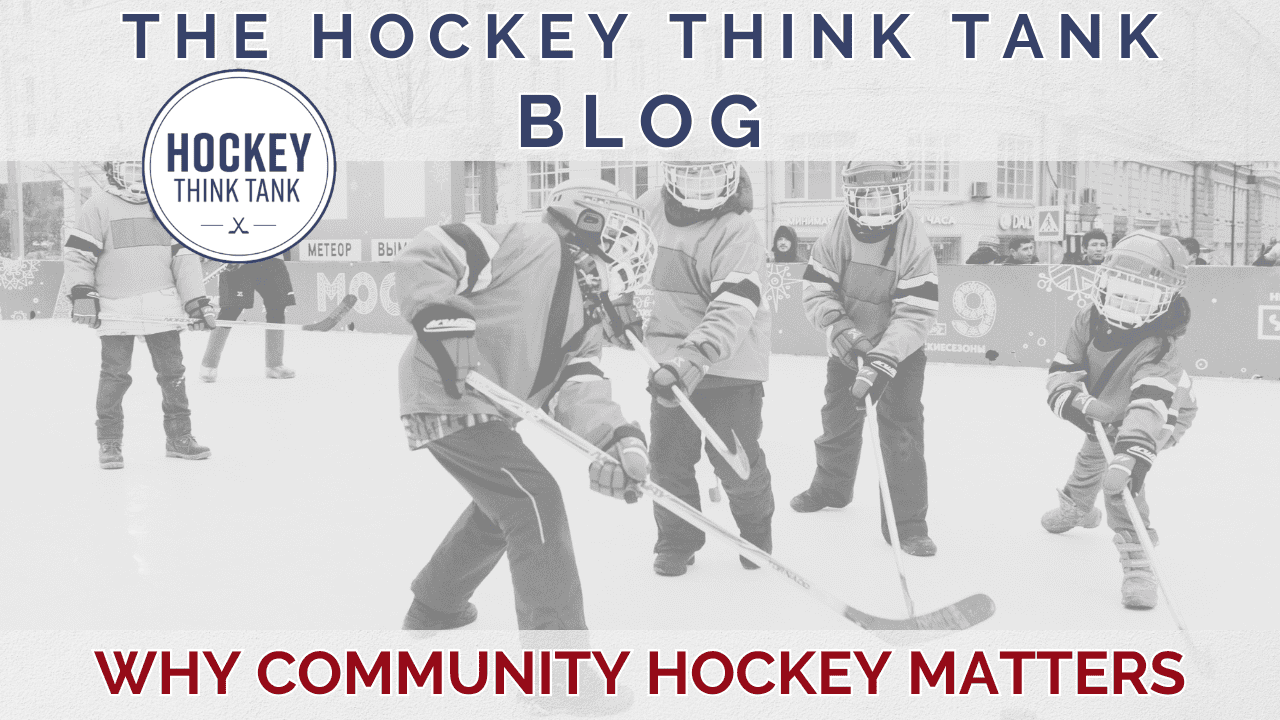
For our family, keeping the love of hockey alive happens in Community Hockey and specifically with the Dryland Development Project (DDP). My son is one of the original members of DDP that started out as extra stick & puck time at 6am on Sundays called The Breakfast Club. While some thought kids and parents wouldn’t show up for a crazy-early practice – turns out, many loved it! Not only did kids show up, they showed up every week. My son, who was a PeeWee at the time, would ask if we could get to the rink at 5:30am because he was allowed on the ice as quickly as he could get dressed; he didn’t have to wait for teammates, refs or the Zamboni – it was a clean sheet waiting just for him. Kids of all ages were there. They could participate in learning a new skill or just skate around and play with a puck – no judgement, no pressure to perform. The only rule was you had to be a respectful and kind hockey player. The kids had two hours to just play with cheers and laughter adding to the buzz of hair metal bands blasting through the speakers. As fans of the Hockey Think Tank, the coaches were quickly realizing that unstructured “fun” hockey had a role to play in youth hockey development if kids & families were willing to wake up at 5am on a Sunday to be there. The Dryland Development Project (DDP) aka “Roosters” non-profit organization was born out of the success of the Breakfast Club mornings with the idea of providing the unstructured play and athletic development with a focus on fun. I was skeptical at first and worried about how much time we could devote to it; I try hard to not over schedule my son and I try really hard to never commit to a program if I don’t think we can be there consistently. There was no pressure to join DDP and no rules about participation. The entire summer program (1 night of ice, 1 night of field games plus access to Hockey Think Tank) cost less than 1 week of a summer hockey skills camp or pair of skates. The kids got workout shirts, gym bags, sweatshirts and cool jerseys with any name they wanted for the back (“Dukes”) and you could have any number you wanted because it didn’t matter if there were duplicates since any games played would all be in house. ALL of this was included in the low cost price; it was a no brainer to give it a try and to lead by example to support Community Hockey.
The coaches and the parent volunteers were learning as they went. If the kids loved something and it worked well, more of that. If the kids were less enthusiastic about a drill or activity, it was scrapped. The programming is designed by and for the kids. There is no ego involved. The true leaders of the community showed up and brought friends from other neighboring towns because it’s not a competition or a secret resource only available to those who know. At the heart of every decision is the phrase, “Is this what the kids want and is it what is best for them?” DDP leadership ask questions and listen to the feedback from players and parents every week. When I pointed out the pressures and stress the young kids who play for the Club teams face, and that DDP shouldn’t be adding to that in any programming, I believe they listened to that feedback and dug in on the fun. The kids are excited to show up and have fun playing hockey with their friends. It doesn’t matter if you make a bad decision or try a new skill, it doesn’t matter if your team wins or loses.
This was DDP’s second summer and the year that I think DDP was most successful. What I found was a re-birth of the Community Hockey model that used to be prevalent in Massachusetts. This past summer, DDP had 3 nights of programming; on ice skills, off ice field games and shooting clinic, and the highlight of the week, Summer Shinny and Premier League Scrimmages at the William Chase Arena in Natick (in addition to access to the Hockey Think Tank programming). The Summer Shinny and Premier League Scrimmages were mixed teams of ages and abilities (Squirts & PeeWees, Bantams & Midgets, Natick High School & Adults/Juniors). Volunteer parents are the bench coaches; we are there just to keep kids safe and having fun – no actual coaching is involved. With music blasting, kids were buzzing on the ice and having a lot of fun. I was a bench coach for the Bantams & Midgets and loved getting to know more of the older kids that my incoming Freshman son will be playing with in High School. On the first night of scrimmages, my son asked if he could stay to play with the adults/juniors and varsity kids and he was allowed. Not only was he able to keep up, he made a beautiful pass to a teammate in front of the net who scored a goal. Because my son advocated for himself, it showed other kids that it was OK to ask to play. If teams had room, the younger Bantam/Midget kids could play with the varsity kids and adult/junior players. Everyone was accommodated at some point and the kids saw that they could make an impact playing at a higher level of hockey. More importantly, it allowed the incoming Freshman kids to have interaction with the older Natick varsity hockey players and alumni; strengthening the bond of all the kids who make up the Natick High School hockey program.
This fall, DDP has booked ice after school on Thursdays, Saturday mornings, and on days when there is no school for stick & puck time. My Bantam age son loves the Saturday morning time on ice when he has late evening games because it allows him to get an easy skate in and play with the younger kids. They play half ice scrimmages. He can skate circles around the kids on ice, but does so only to retrieve the loose puck and pass it off to a younger teammate who is in the right place to take a shot on net or defend against another kid his age who poses a threat to his team. The younger kids love it when they are able to sneak the puck around the older kid who failed to stop them. My son gets to be the upperclassman to these future teammates of his Natick High School hockey team.
So many kids and families take the attitude that these types of activities are not worth their time or below their kids abilities. I used to think that way before I knew better too. My son has so much fun that he doesn’t care who is on the ice, he is just happy to be there. No one cares if he makes a mistake or tries a skill that he hasn’t mastered. No one is looking at the kids on the ice and making judgements about whether or not they’ll “make it” in hockey. The parents and families there aren’t worried about who plays for what team or making judgmental comments and young kids and their hockey abilities. The pressure to perform is lifted, momentarily, for a brief window of time in my son’s weekly schedule of gym time, skills, skating, team practices and games where he is demanded to give his very best. He is giving back to the younger kids of the community as much as they are giving back to him; not a waste of time at all. He is learning how to be a leader and a mentor which will serve him well in life. I hope that one day, when he has a child who plays hockey, he will think back to what made his hockey experience so much fun and remember what it is all for; the kids and their love for this great game of hockey.