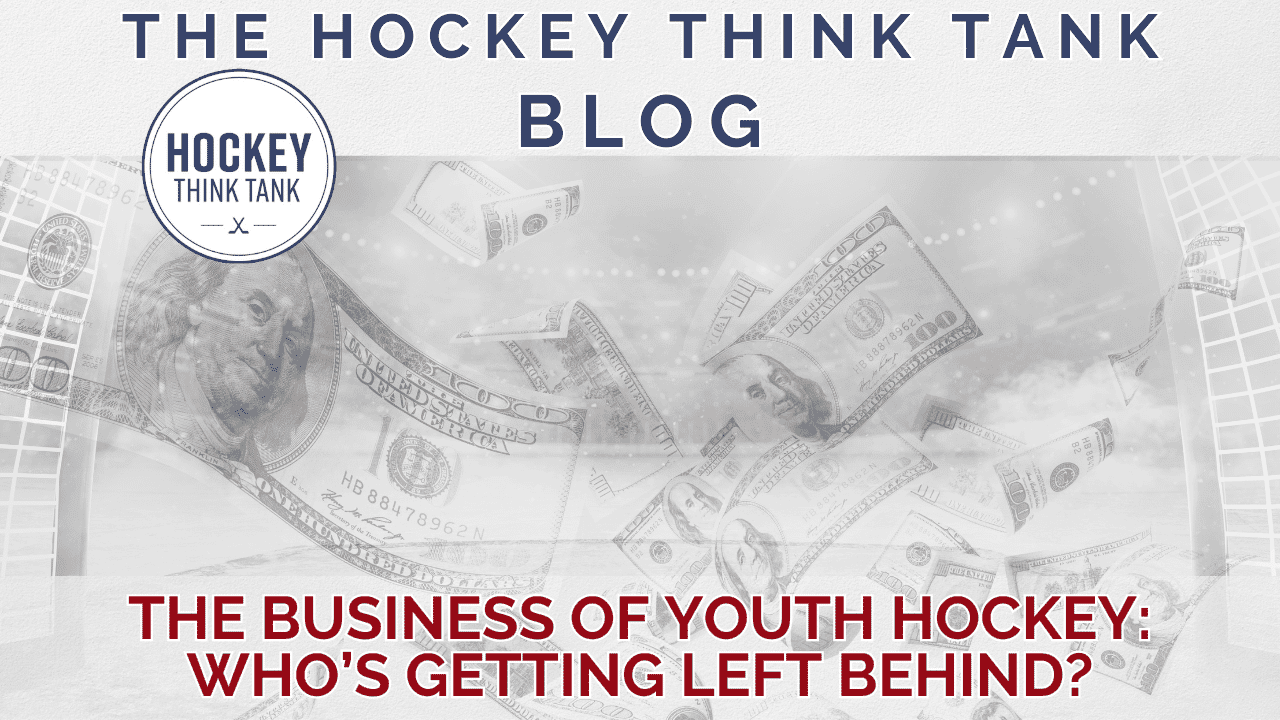
There’s a hard truth that many in the hockey world are feeling but few are willing to say out loud: youth hockey has become a business – and business is booming. But at what cost?
Families are paying tens of thousands of dollars a year for what used to be a community-based sport. Kids are traveling coast to coast before they’ve hit puberty. Multi-sport athletes are being forced to choose earlier and earlier. And slowly but surely, we’re pricing kids – and their families – out of a life-shaping experience.
Let’s be honest: hockey can be one of the best teachers of life. It builds resilience, teamwork, work ethic, and emotional regulation. But somewhere along the way, we started acting like it’s a business degree instead of a childhood experience.
So…how did we get here?
Parents and the FOMO Economy
Let’s start with the mirror. Many parents are acting out of fear – not malice. Fear of falling behind. Fear of missing the path to junior or college. Fear that their kid won’t get the same opportunity as someone else. The result? A growing willingness to say “yes” to every showcase, every skills session, every spring or summer team, every new coach promising a leg up.
This isn’t judgment. It’s empathy. Youth hockey is confusing, opaque, and often predatory. When you’re told that this extra camp or that exposure event could make the difference, what loving parent wouldn’t lean in? But collectively, that fear creates a system where the loudest voices are the ones selling something – and the quiet, steady voice of “balance” gets drowned out.
Organizations That Say One Thing and Do Another
You’ll hear a lot of organizations preach the value of multi-sport athletes – and they’re right. Science backs it. Common sense backs it. But how many actually live that philosophy?
We’ve heard too many stories of kids benched for missing a practice due to a soccer playoff. Or quietly passed over at tryouts because they weren’t around all summer. And what does that teach the next generation? That saying “no” to over-scheduling means saying “no” to opportunity.
True leadership in youth hockey means aligning what we say with what we do. If we want athletes who love the game long-term, we need to stop punishing them for having other passions.
We fully recognize that at some point, reaching the highest levels of any sport does require a degree of specialization. And that “right age” is different for every kid. But specialization seems to happen younger and younger and it’s causing a lot of over-use injuries and mental burnout. Early specialization may create short-term gains, but long-term athletic and personal development thrives on variety, balance, and joy.
The Industry Behind the Ice
There’s a growing number of for-profit entities thriving in the youth hockey economy. Off-ice training centers, skills coaches, tournament operators, recruiting services – many of them offering value, no doubt. We at the Hockey Think Tank hope we are one of those providing great value and we work our hardest to provide so much free value through our podcast, blog, newsletter, and social media so we’re accessible to everyone. But it’s hard to ignore the pattern: the more stressed and confused parents are, the more these “opportunities” multiply.
Stay-to-play tournaments are a perfect example. They often require families to book specific hotels – at marked-up rates – in exchange for the right to compete. Multiply that across multiple weekends a month, and suddenly your family vacation fund is fueling someone else’s bottom line.
And then there’s the bigger picture: how does a kid in a non-traditional market keep up if they don’t have access to affordable ice, competitive teams, or deep-pocketed sponsors? Are we really growing the game, or just creating an elite pipeline for those who can afford the toll?
What’s Being Lost
The result of all this is more than just money – it’s childhood.
When every weekend is booked with travel, when every season bleeds into the next, when every game is high-stakes… when do kids just play? When do families just be families?
What made hockey magical for so many – frozen ponds, local rivalries, car rides with Mom or Dad, shinny games with no refs or rules – is being replaced by a high-performance conveyor belt. And if we don’t pause and reassess, we risk burning out not just players, but an entire generation of hockey families.
So What Now?
We need more transparency. More courage from organizations to say “enough” and actually mean it. More education for families on what development really looks like. More community models that prioritize access over optics.
It starts with honesty – about how we got here, who benefits, and what we’re willing to change. Because if hockey is supposed to be for everyone, it sure doesn’t feel that way right now.
And if we don’t work together to rebalance the system, we’re going to lose more than just talent – we’ll lose trust, joy, and everything that makes this game worth playing in the first place.