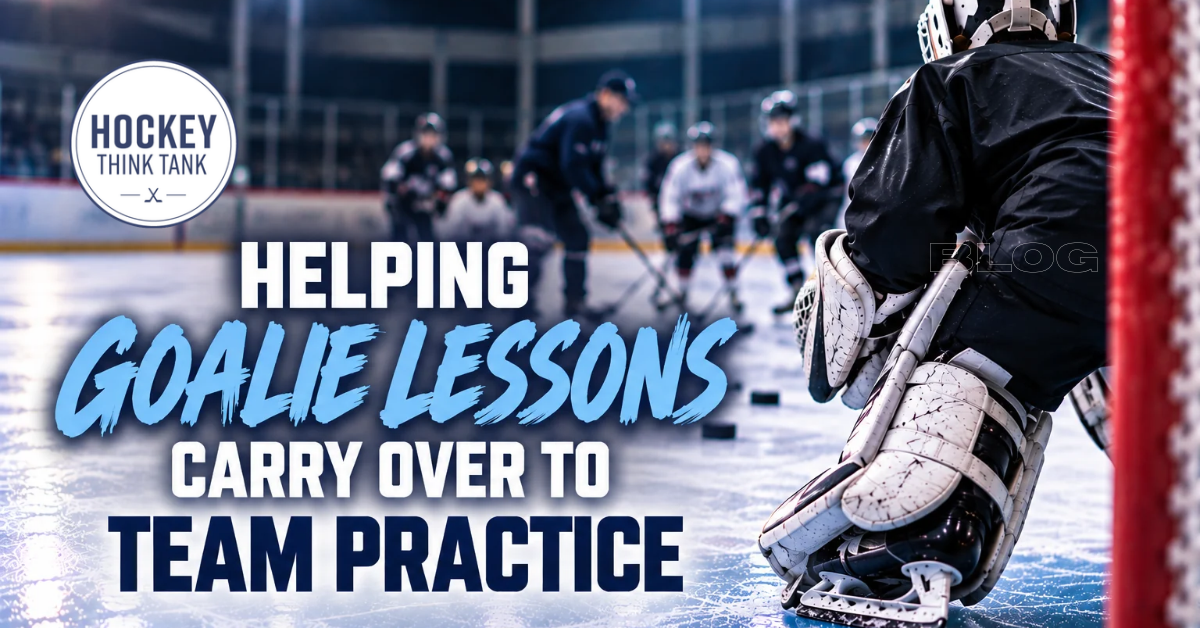
Here’s a great post from Mike Rask, founder of CreaseOS on how coaches can be on the same page with their goaltenders who are taking lessons with separate goalie coaches.
A private goalie lesson can give a player a clear focus. At the next team practice, does anyone else know what that focus is?
I’m a goalie coach with Lady Liberty in St. Louis, and I’ve been coaching goalies for about five years. Many of the goalies I coach also take private lessons. I want to understand what they’re working on so I can help reinforce it during our time together.
That takes communication. Here’s a simple approach coaches can use to connect those sessions.
1. Start by asking the goalie.
Before practice, ask, “What have you been working on?” Follow up with, “What does that look like when you’re doing it well?”
Give the goalie room to explain it in their own words. A younger player might remember one phrase. An older player might describe the situation and what they’re trying to change. Either answer gives you somewhere to start.
If the explanation is unclear, check with the other coach. The goalie should have a voice in their development without being responsible for translating between adults.
2. Agree on one focus and what the cue means.
With the goalie and family involved as appropriate, connect directly with the private coach through team-approved communication channels. Ask what they’re working toward, which cue they’re using, and when it applies. Share what you’re seeing in team practices, too.
Neither coach has the full picture. A lesson can isolate a skill; team practice introduces teammates, traffic, decisions, and different time pressures. Those settings give both coaches useful information.
If the advice seems to conflict, discuss the context before changing the player’s instructions. Two phrases may describe the same idea, or the coaches may genuinely see something differently. Work through that together and give the goalie a clear next step.
3. Find a place for it in practice.
Here’s a hypothetical example: a goalie and their private coach are working on arriving balanced before a shot. The team coach checks what that means and identifies a drill where the goalie can practice it.
Before the drill, the coach gives the agreed reminder. Between reps, they ask, “Did you feel balanced when the shot came?”
That creates something specific to discuss. A save or a goal alone won’t tell you whether the player did what they were working on. The drill also needs to offer a realistic opportunity to practice the focus. If it doesn’t, choose a different drill rather than forcing the cue into every rep.
4. Leave a short note for the next session.
A notebook or a shared note can be enough. Record:
- The current focus and agreed cue
- Where the goalie practiced it
- One specific observation
- A question to revisit
Keep observations concrete. For example, “The goalie reported feeling balanced on the first shot but rushed after the pass” gives the next coach more to explore than “needs consistency.” Distinguish what the coach observed from what the goalie felt, and keep access limited to the people involved.
5. Give families a manageable role.
For younger goalies, a parent can help arrange the coach-to-coach connection and keep the agreed notes accessible. The technical feedback should stay with the coaches. Older goalies can take more ownership of recording their focus and asking questions.
Finish with a brief check-in: “What felt clearer today? What should we bring back to your next lesson?” Use the answers to decide together whether to continue, simplify, or adjust the focus.
I’m the founder of CreaseOS, which helps goalie coaches keep their observations organized, prepare the next session, and review family updates before sending them. That work supports the same goal: carrying useful learning from one ice time to the next. Whether you use software, a notebook, or a shared note, start with one clear focus, communicate directly with the other coach, and give the goalie something specific to build on.